

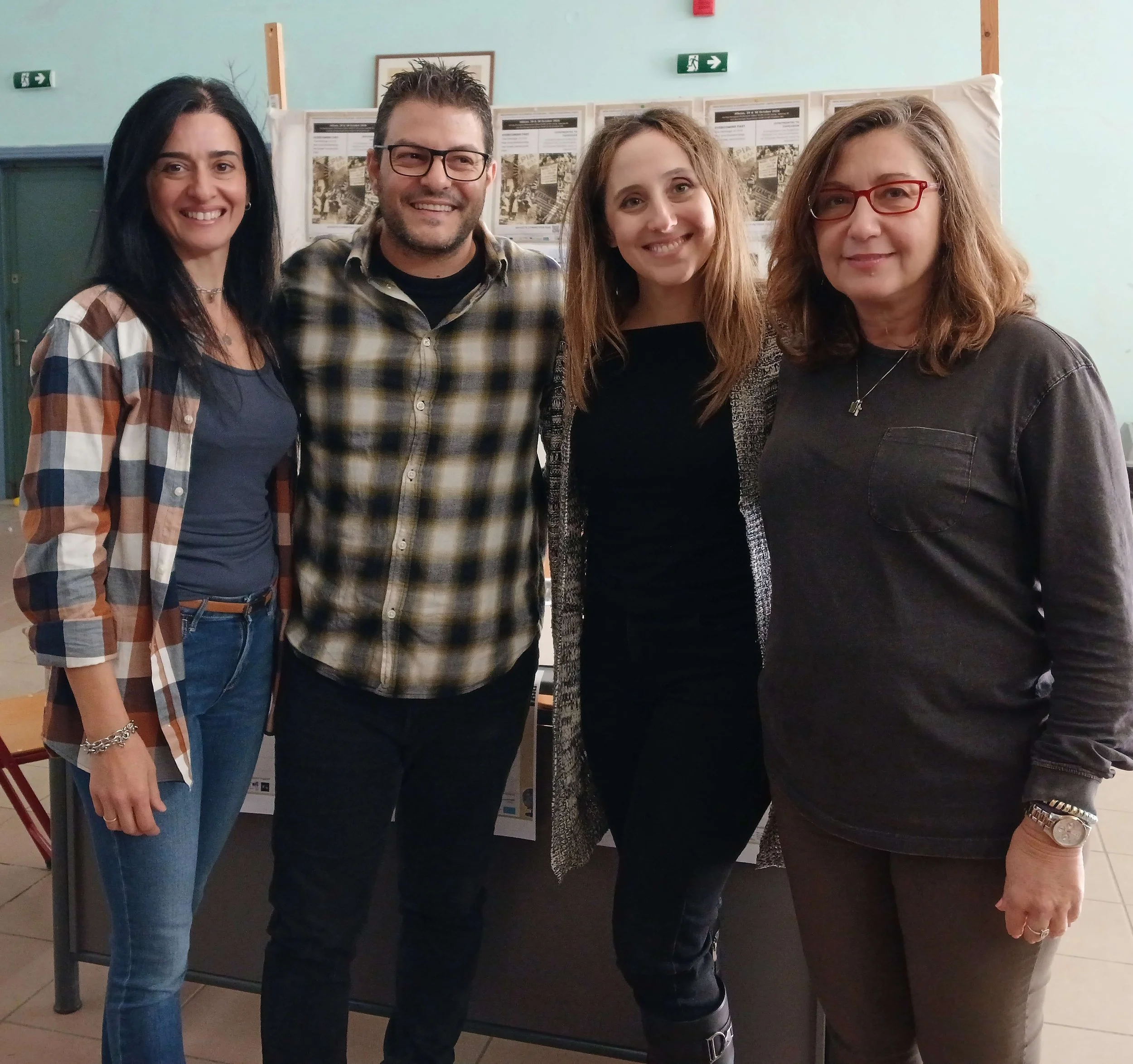
Guide book >> Greek PathAt the 1st High School (Lyceum) of Papagou, in the Attica region of Athens, history was sung, danced, staged and pieced together from images for a day. The Greek local path of the FREI project brought together students, teachers and project partners to trace Greece’s journey from the Resistance during World War II to the democracy of today.
Two periods, one story
The day began with a welcome from the event coordinator and an introduction of the project partners. A shared discussion on European history followed, about the common threads that link the experiences of all participating countries. The programme then turned to the two periods at the heart of the event: World War II and the Civil War that followed it, and the military dictatorship of 1967–1974.
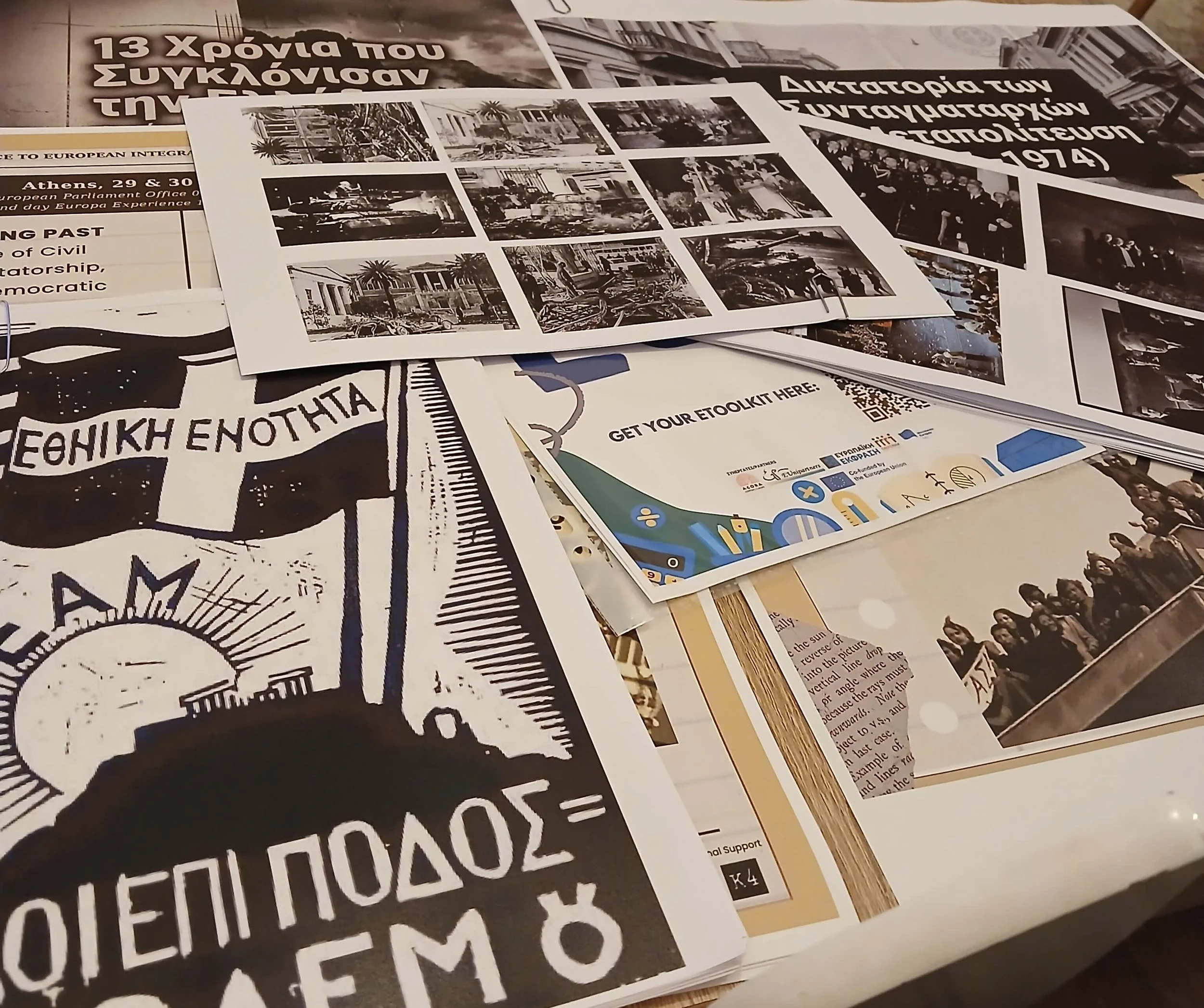
Students and their teachers had prepared presentations on both periods, guided by two history teachers. Maria Balabani focused on the Occupation and the Civil War, while Evangelia Sakellariou led the way through the years of the dictatorship. Working with written and visual historical sources, the students learned to analyse and interpret them. Historical memory was treated not as something fixed in textbooks, but as a living field connected to society today.
History in motion
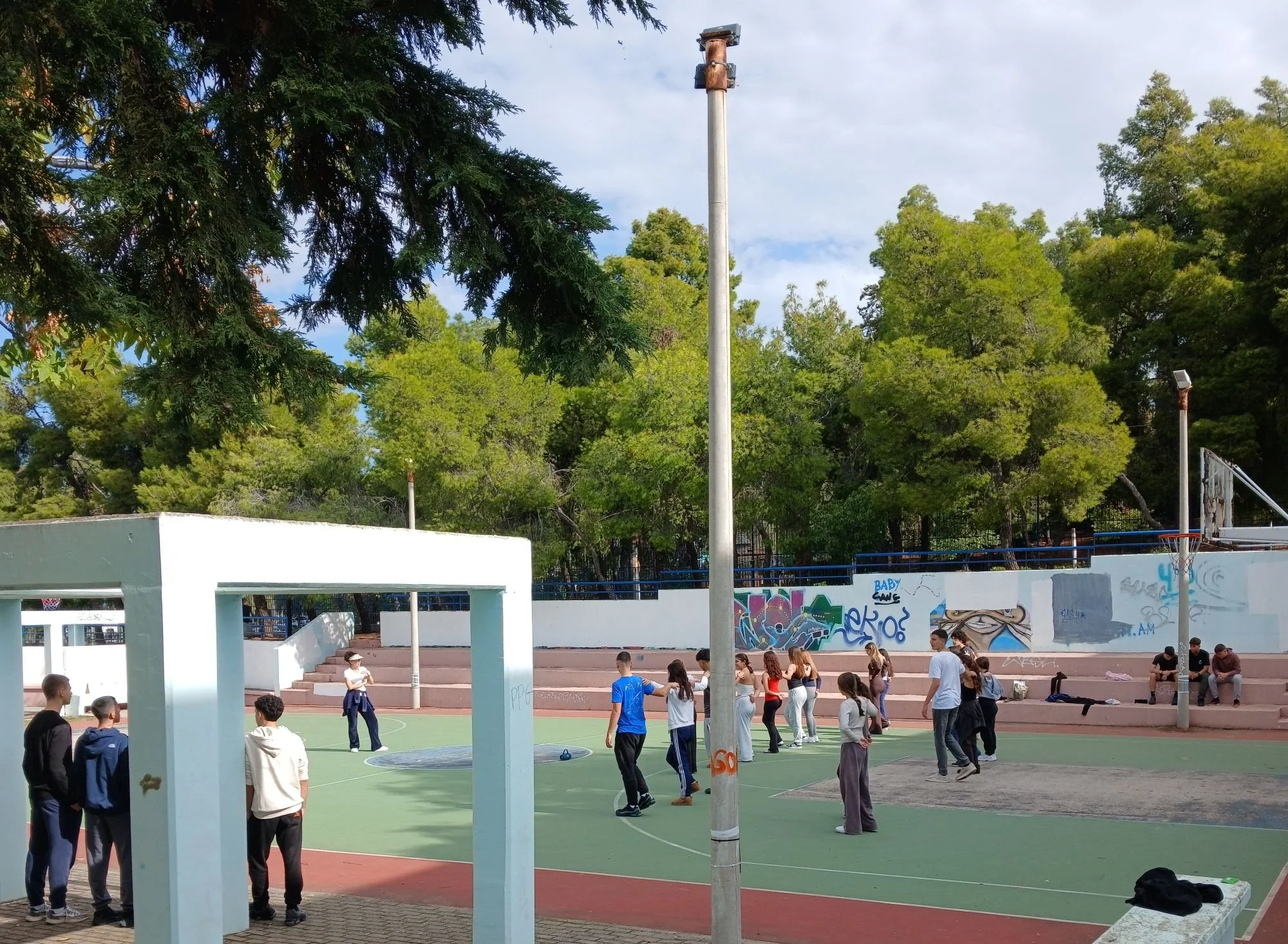
After a break, the school came alive with the students’ own work. In the courtyard, the school’s dance troupe performed two dances. The first was “Oi Saltadoroi” (The Leapers), perhaps the most famous hasapiko of the Occupation. It tells of the young people who risked their lives leaping onto German trucks to steal food, fuel or tyres; its line “I’ll leap, I’ll leap, to take their gasoline” became a symbol of ordinary people’s ingenuity against the occupier. The second, Mikis Theodorakis’ “To Sfageio” (The Slaughterhouse), recalls the torture endured in the cells of the Security Police and has become a defining symbol of the dictatorship.
A theatre group staged excerpts from two works by Bertolt Brecht. A scene from The Life of Galileo explored the conflict between science, truth and conscience on one side and authority and dogma on the other. The second excerpt was a one-act scene from Fear and Misery of the Third Reich.
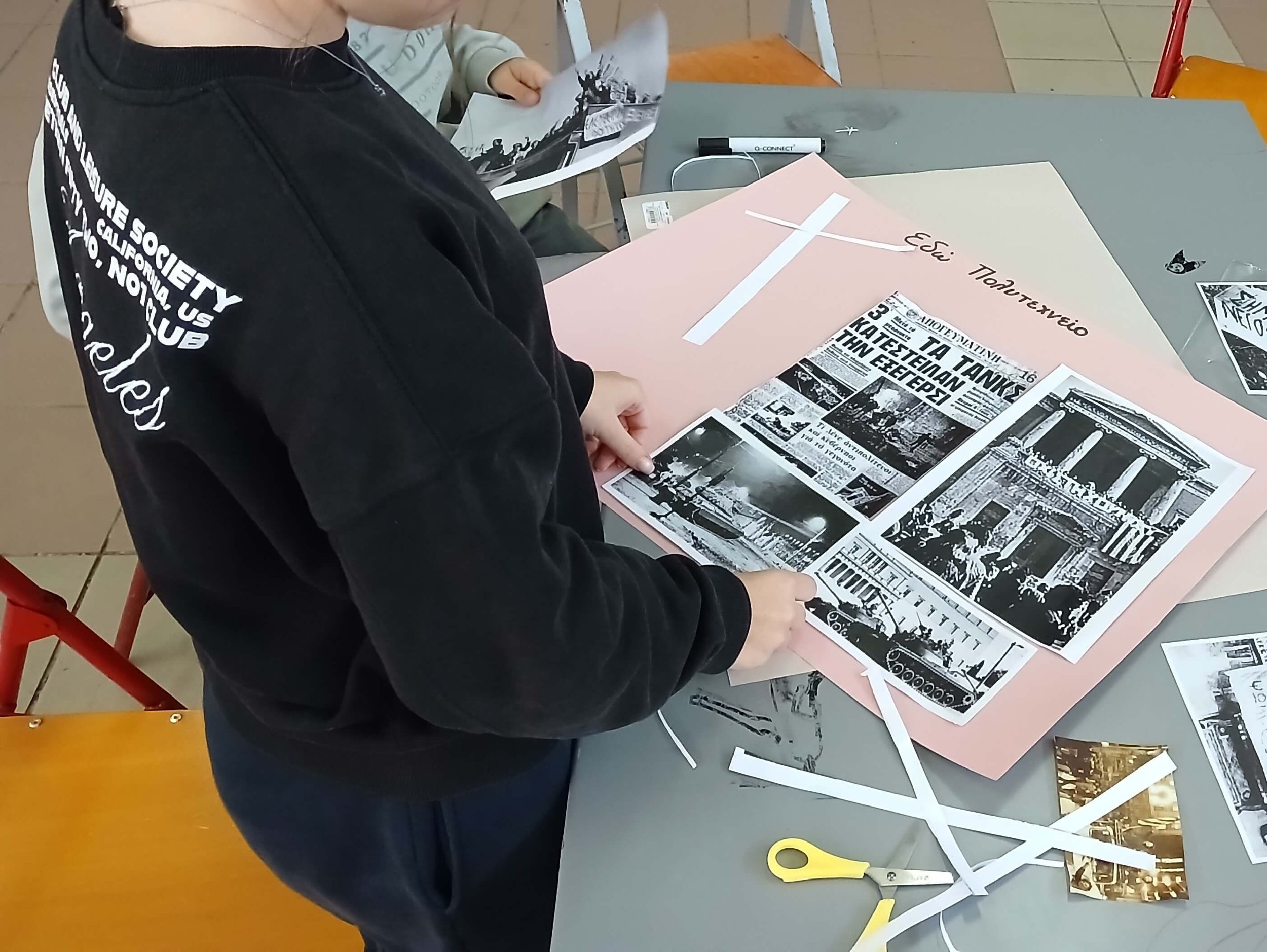
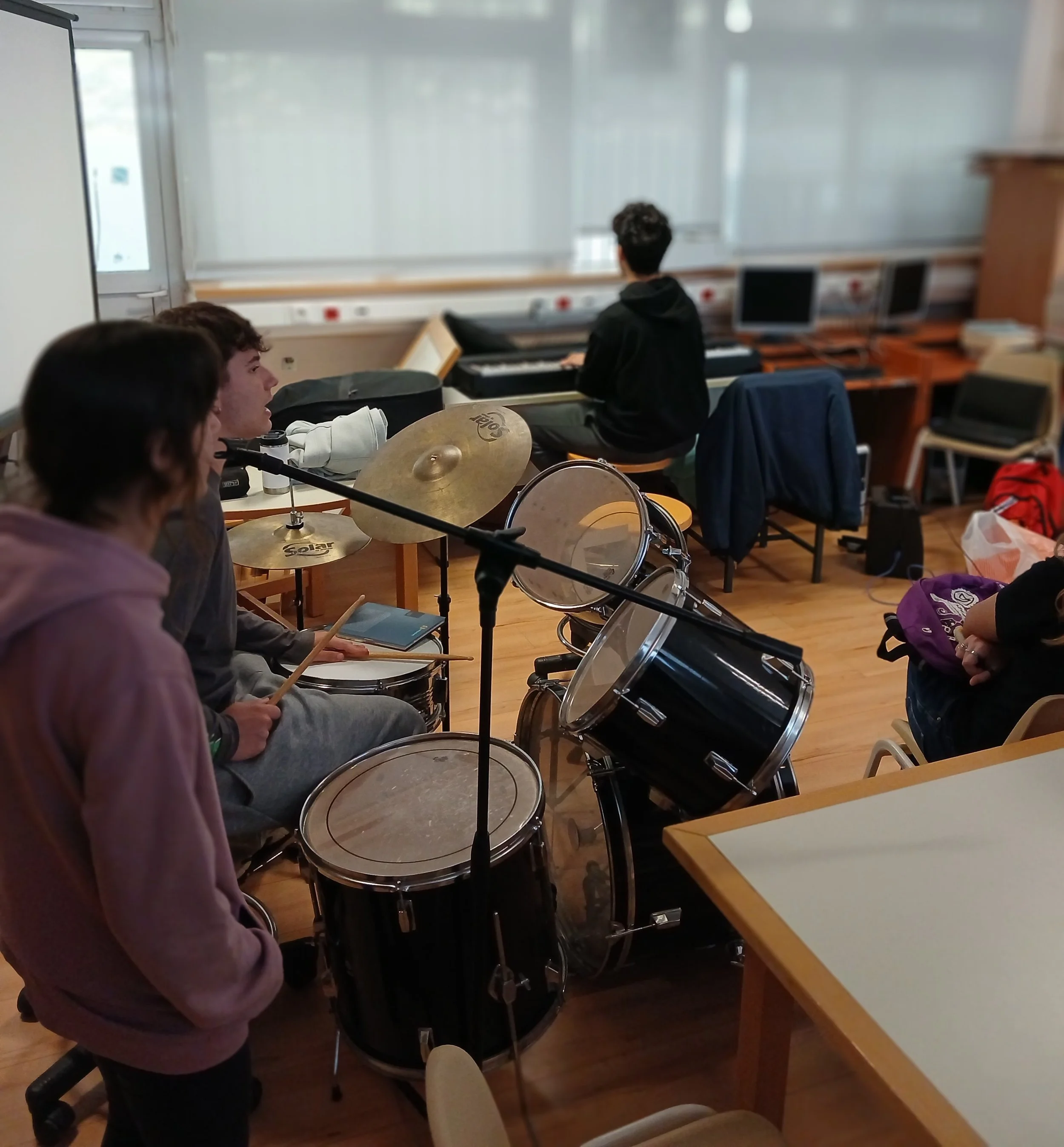
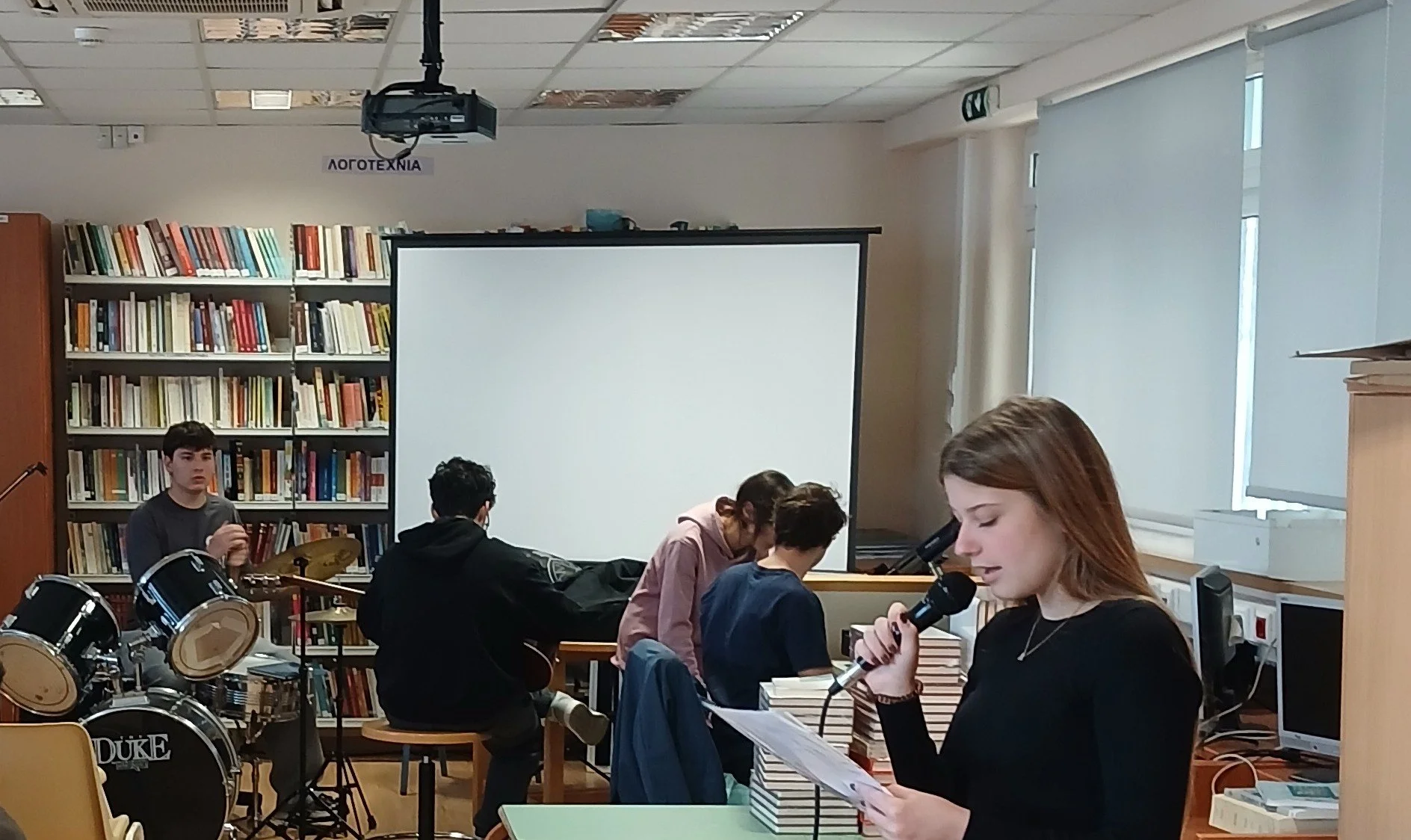
In the choir room, the school band performed songs of resistance they had rehearsed over the preceding weeks: “Heroes” (Stefanos Vakalis / Notis Mavroudis), “The Accordion” (Giannis Negrepontis / Manos Loizos), “The Blood of Love” (Odysseas Elytis / Mikis Theodorakis) and “Saturday Night in Kaisariani” (Lefteris Papadopoulos / Stavros Xarchakos). Between the songs, students took turns as narrators, recounting the story of the 1973 Athens Polytechnic Uprising.
A lasting exhibition
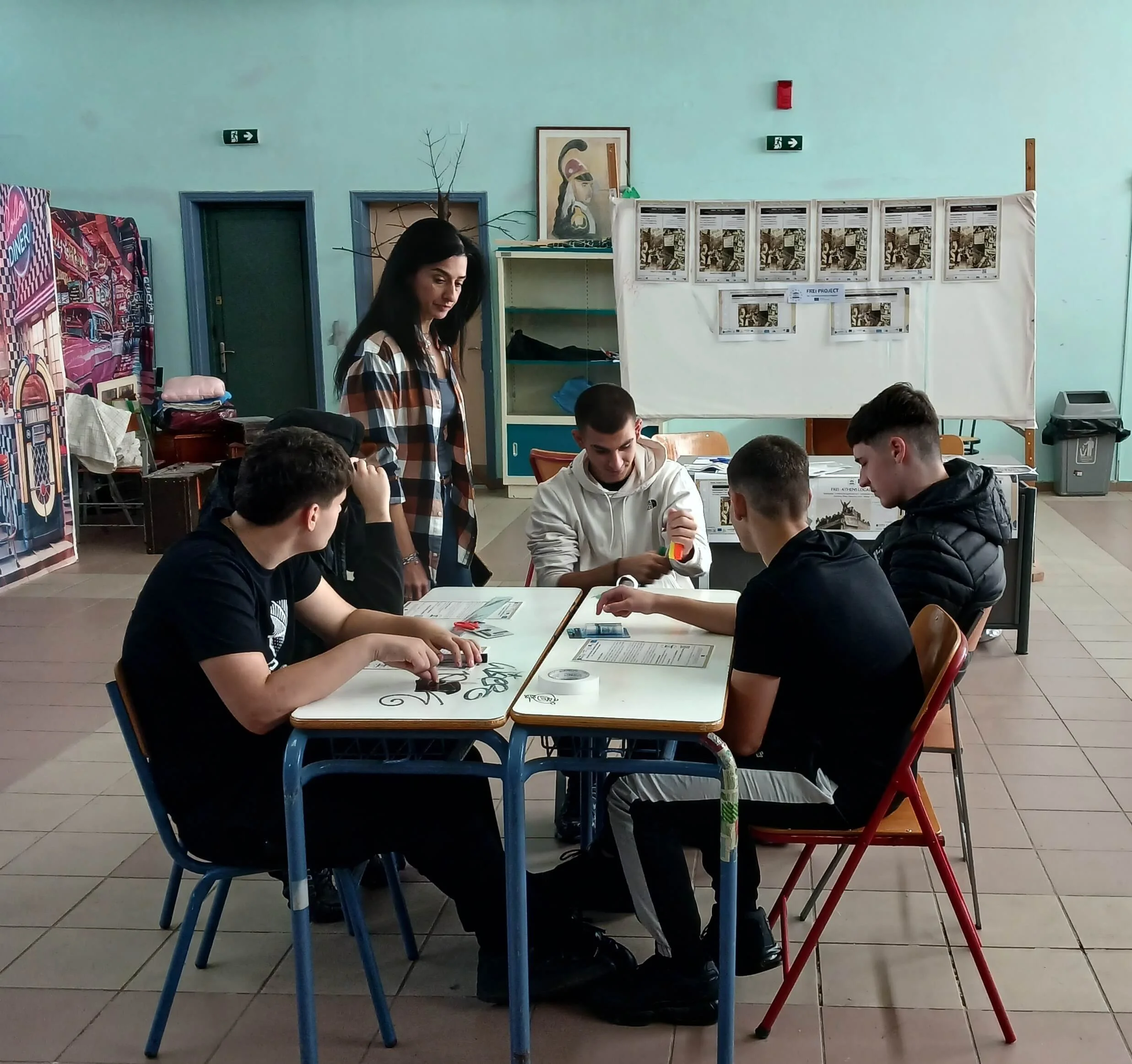
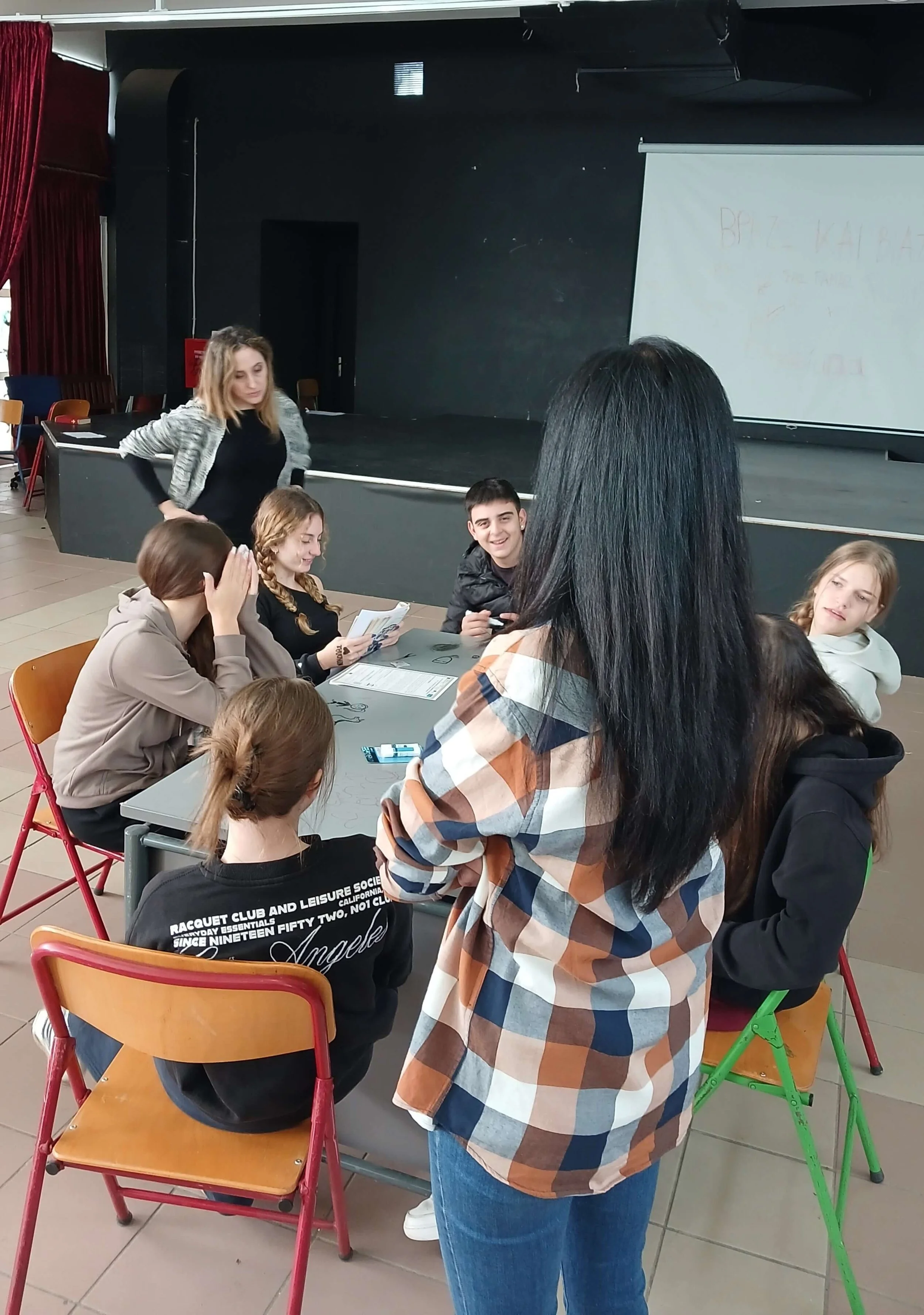
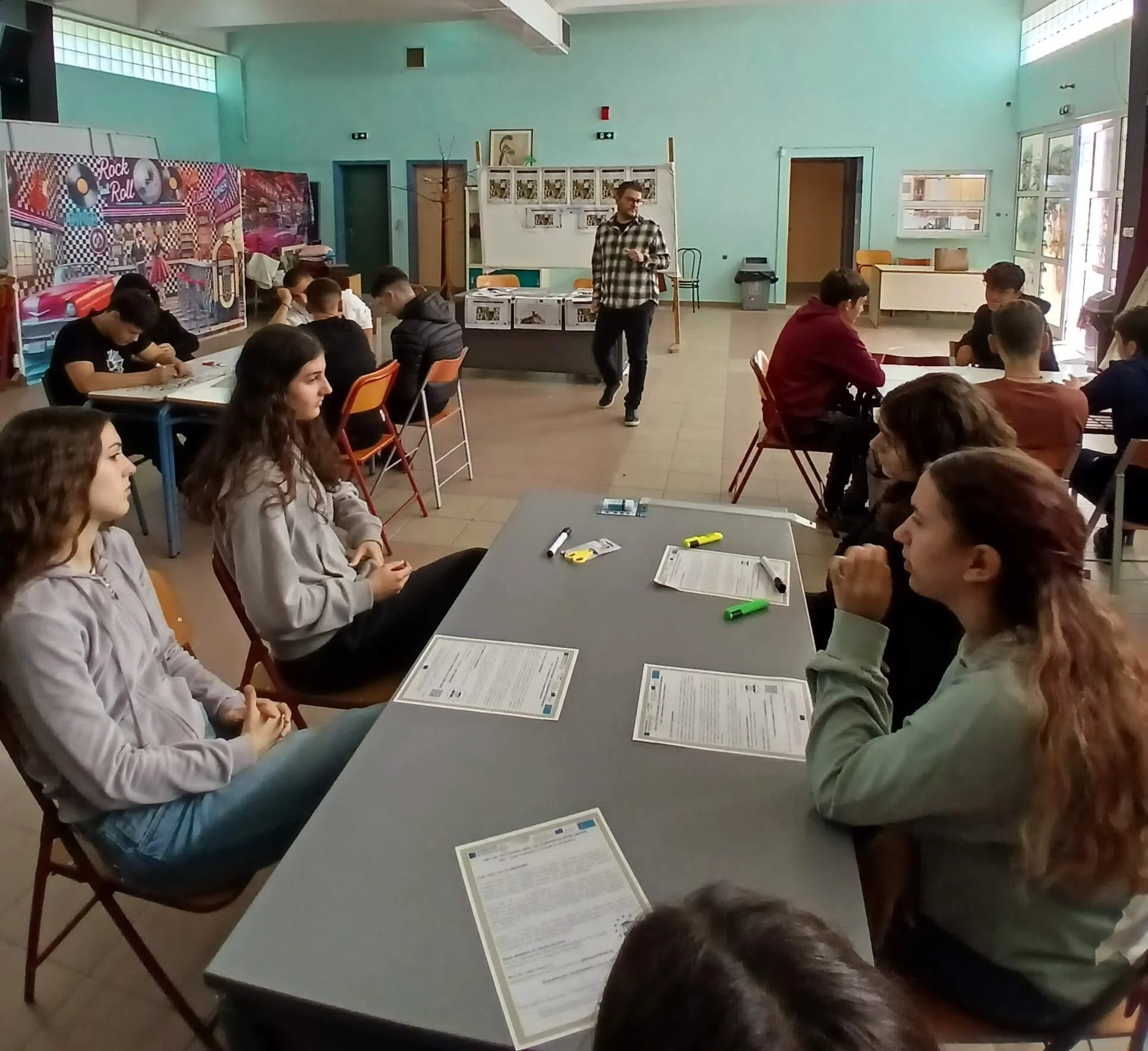
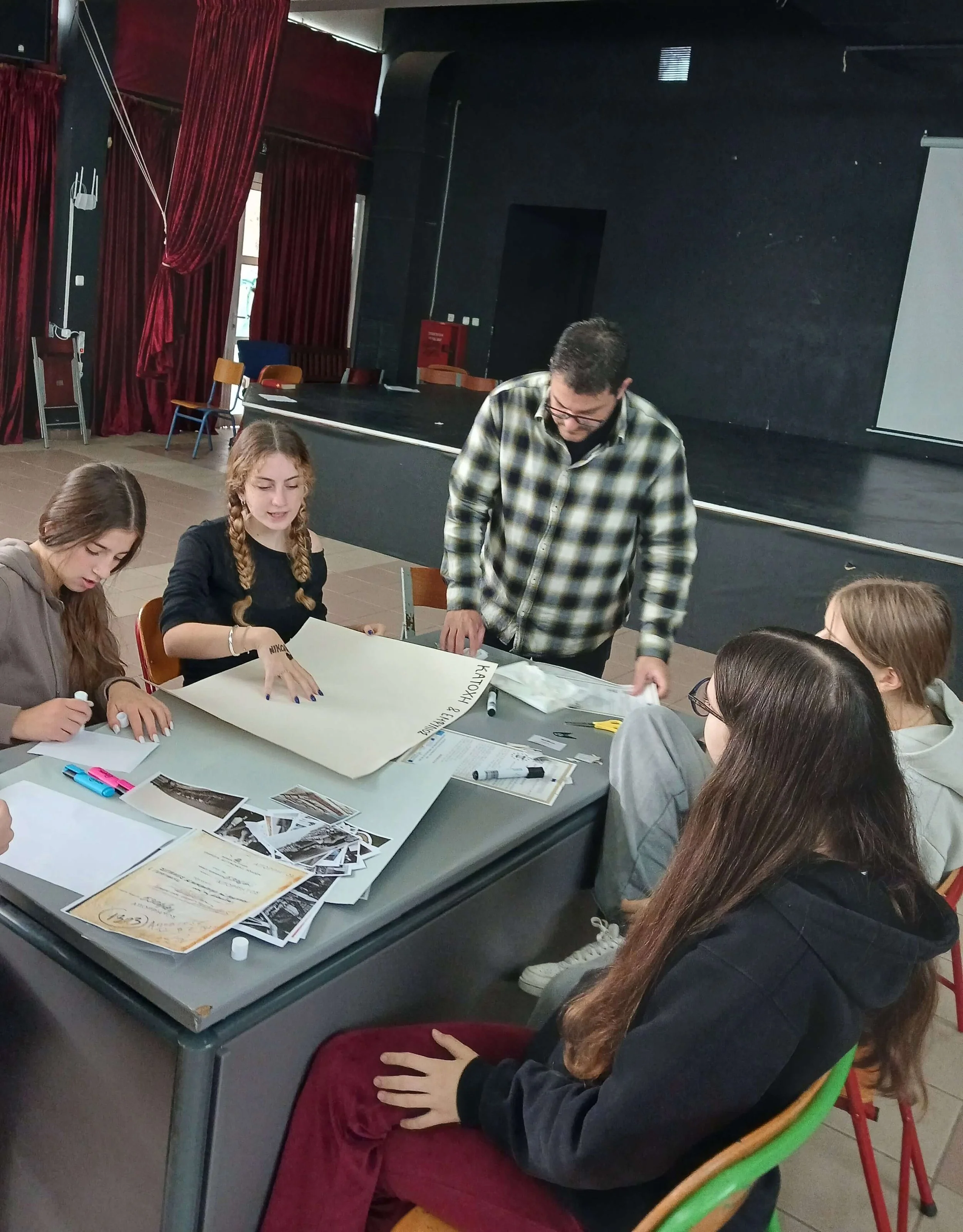
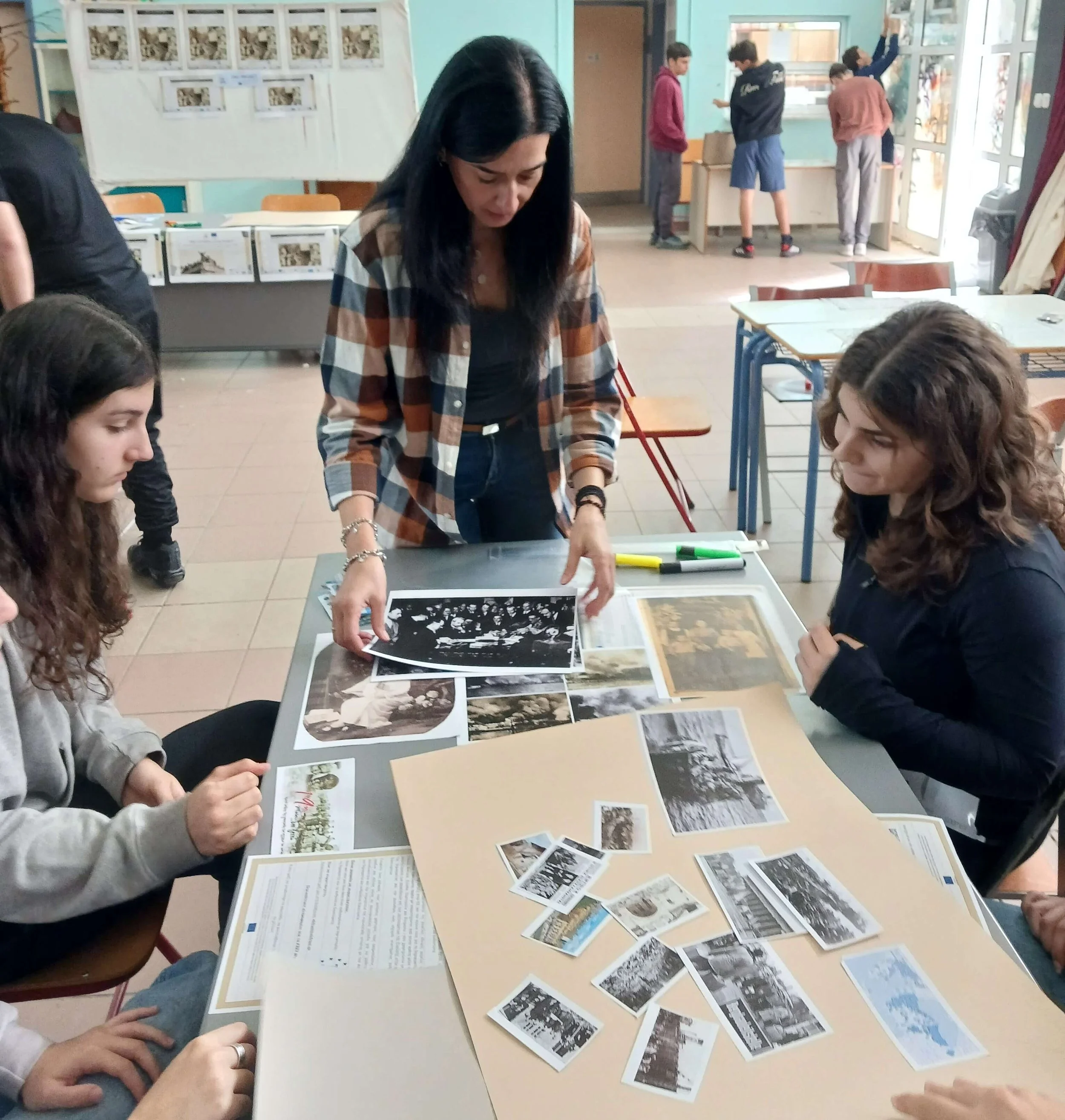
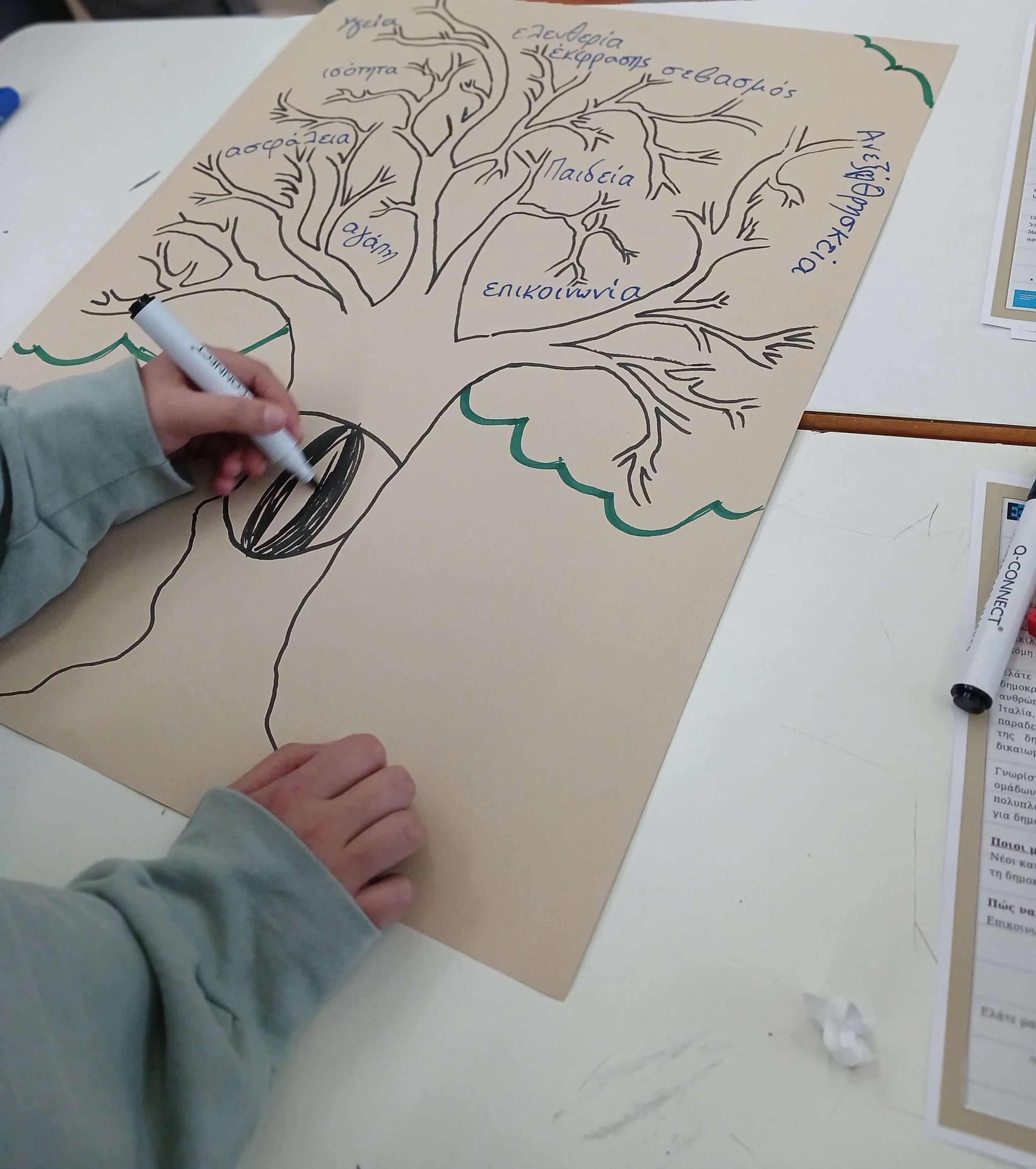
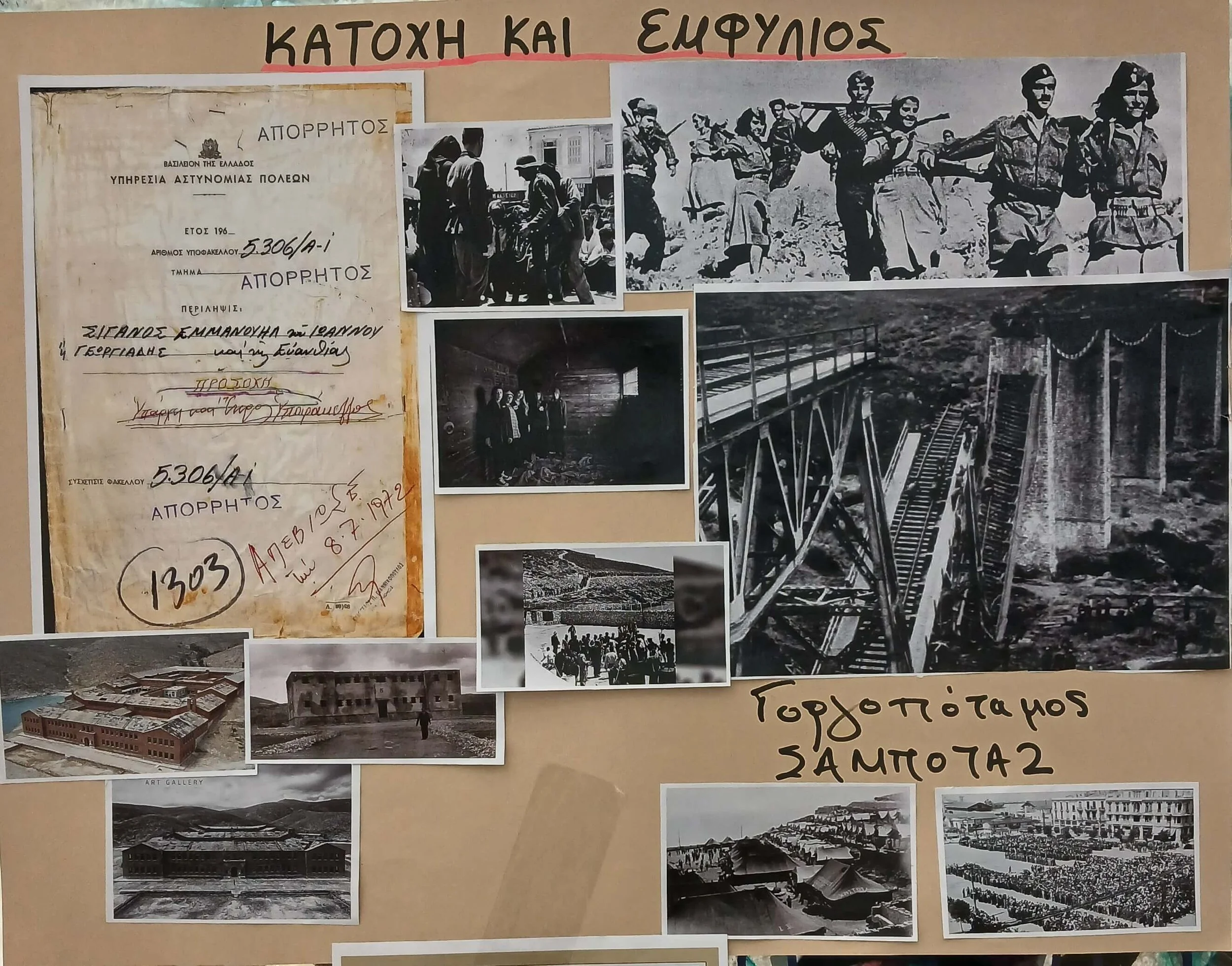
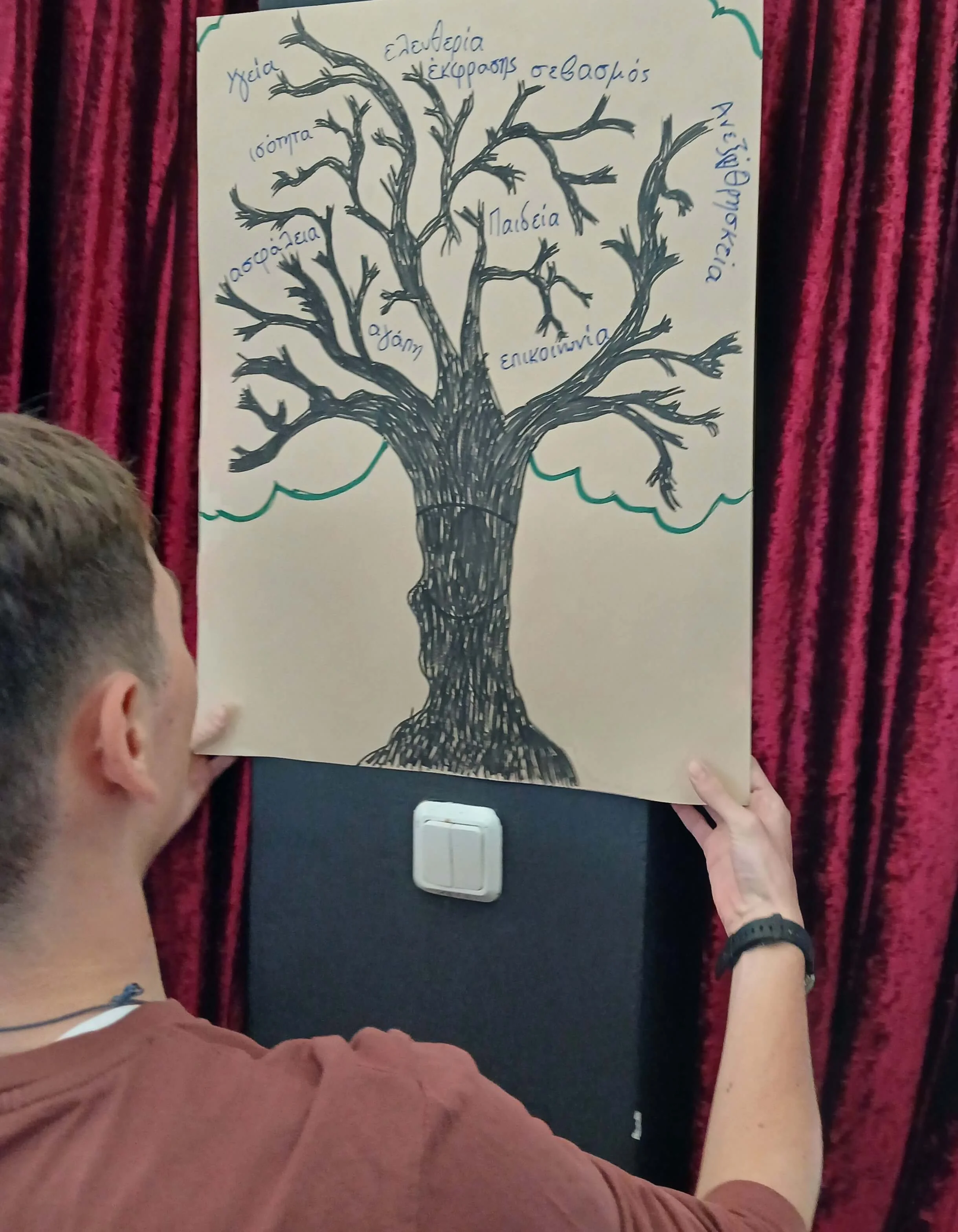
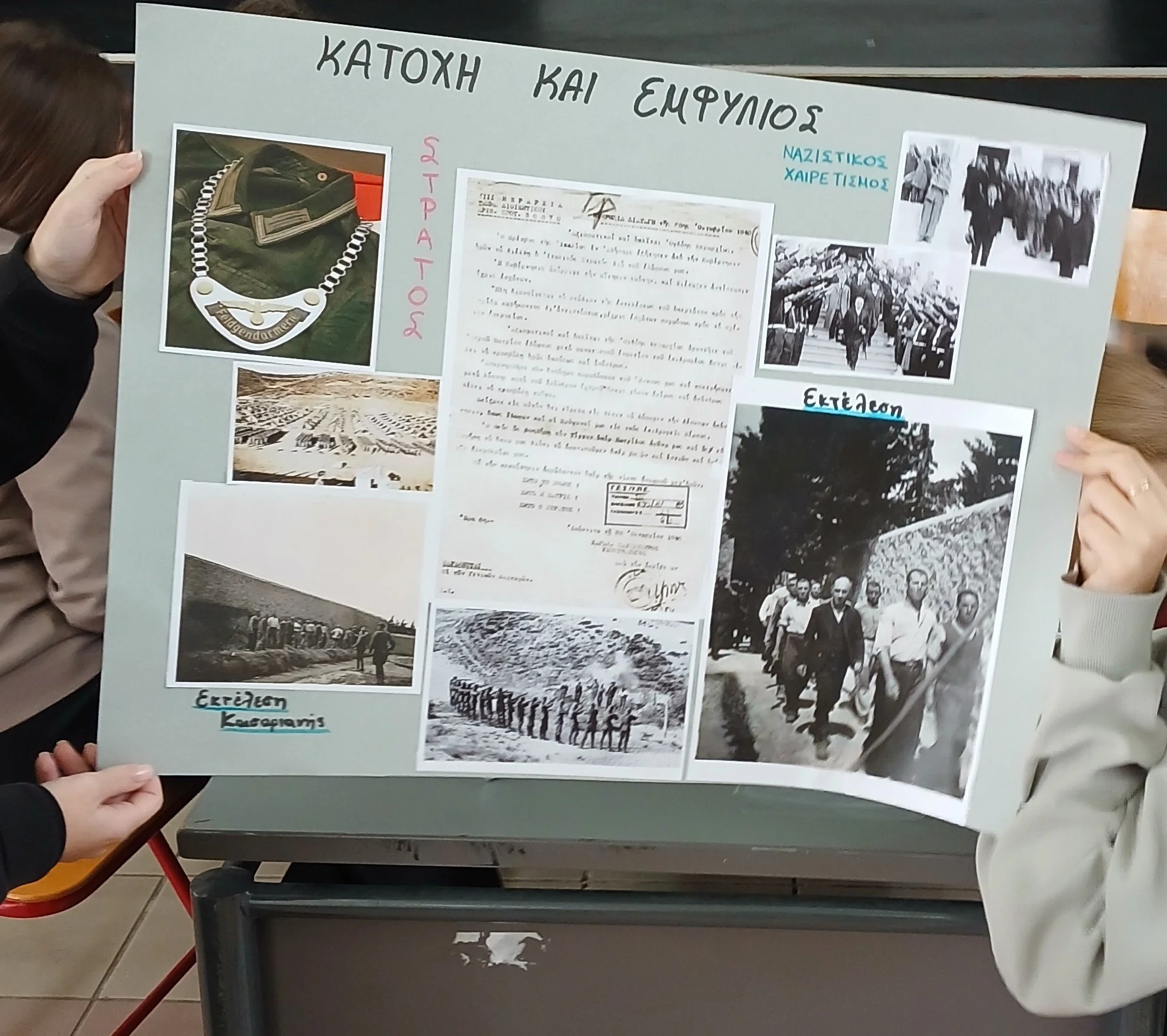
The day ended in the school’s event hall, where the students, working in groups with their teachers, created thematic photo exhibits. One group designed a tree, its branches carrying the values of democracy. The exhibition will remain in the school as a lasting reminder of their participation in FREI.
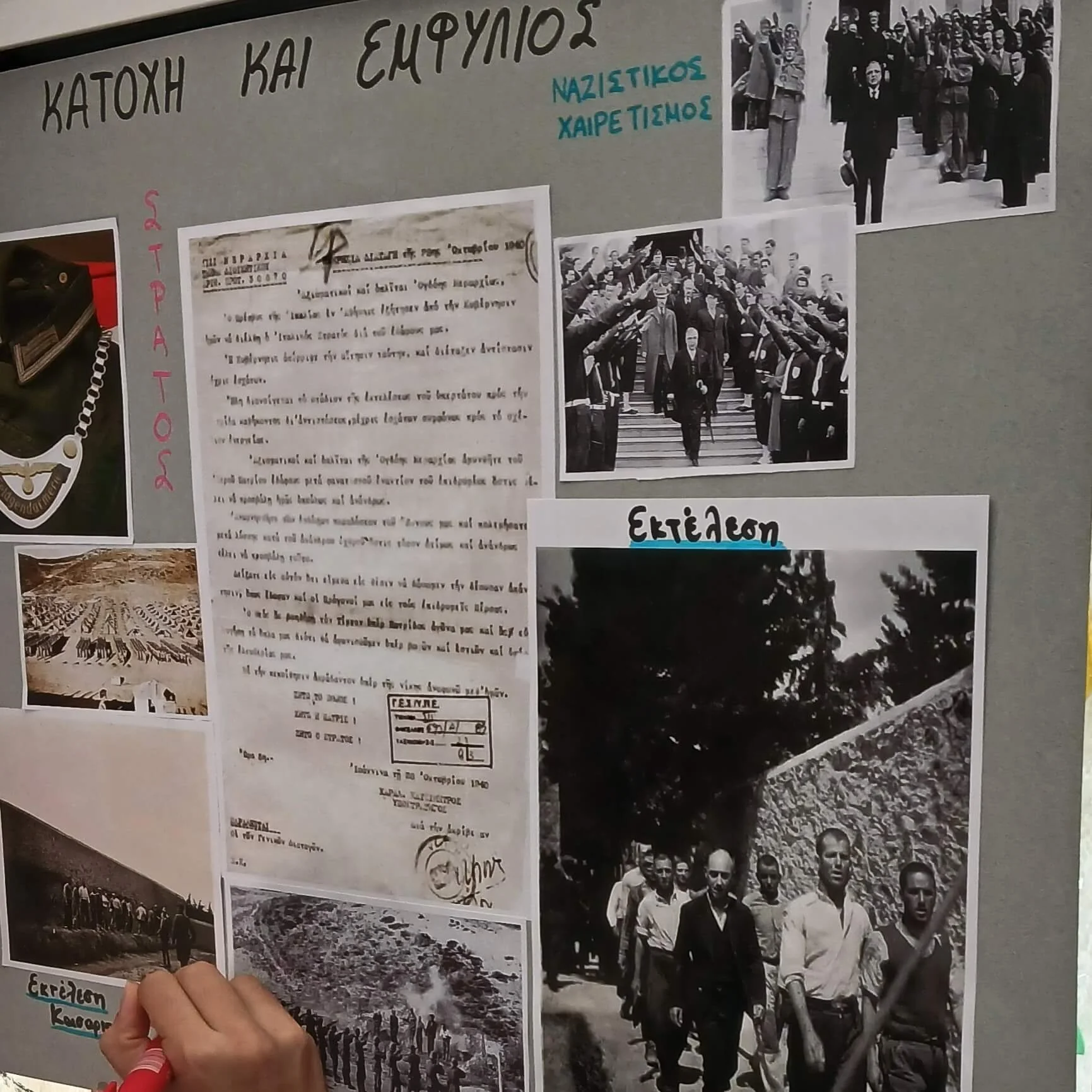
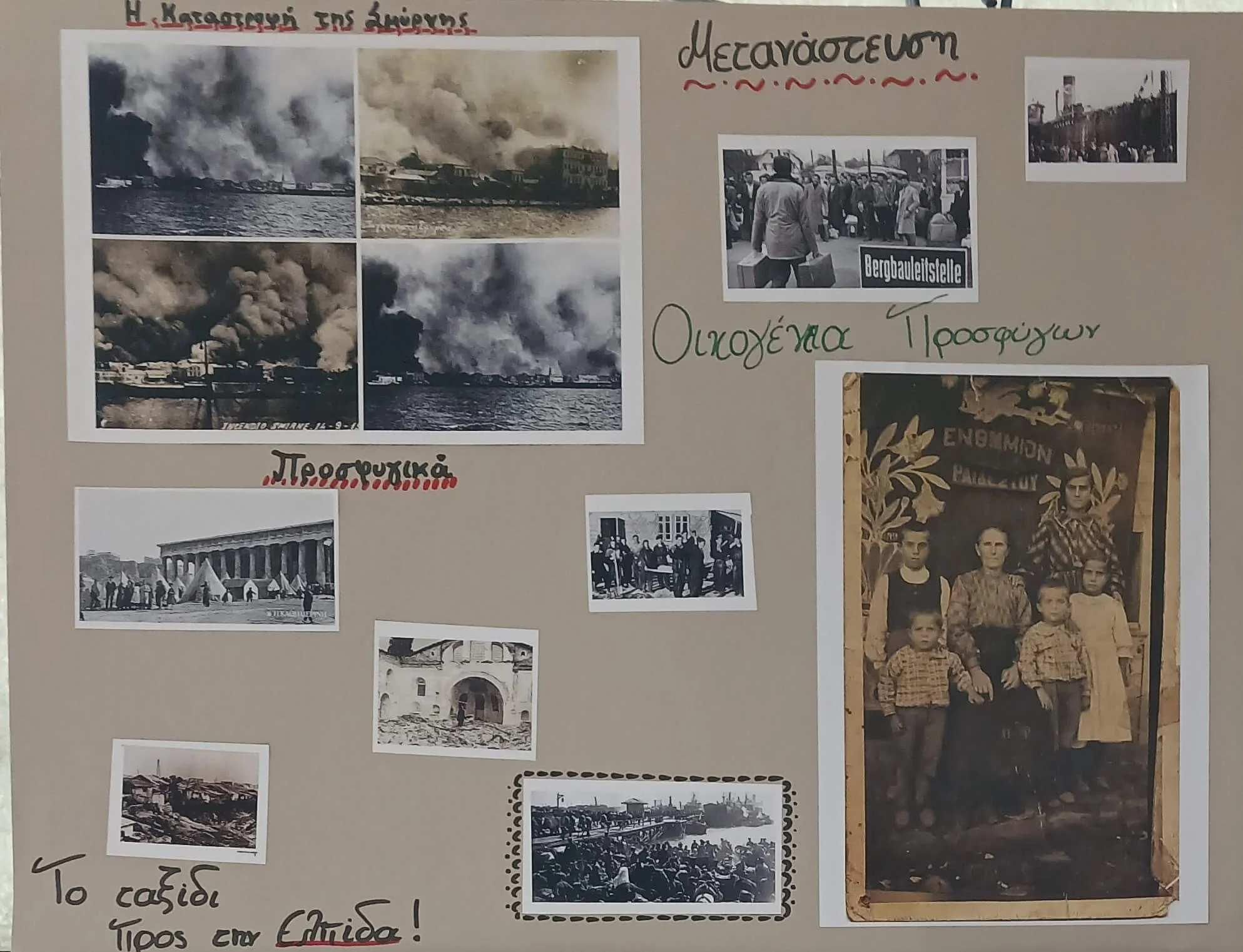
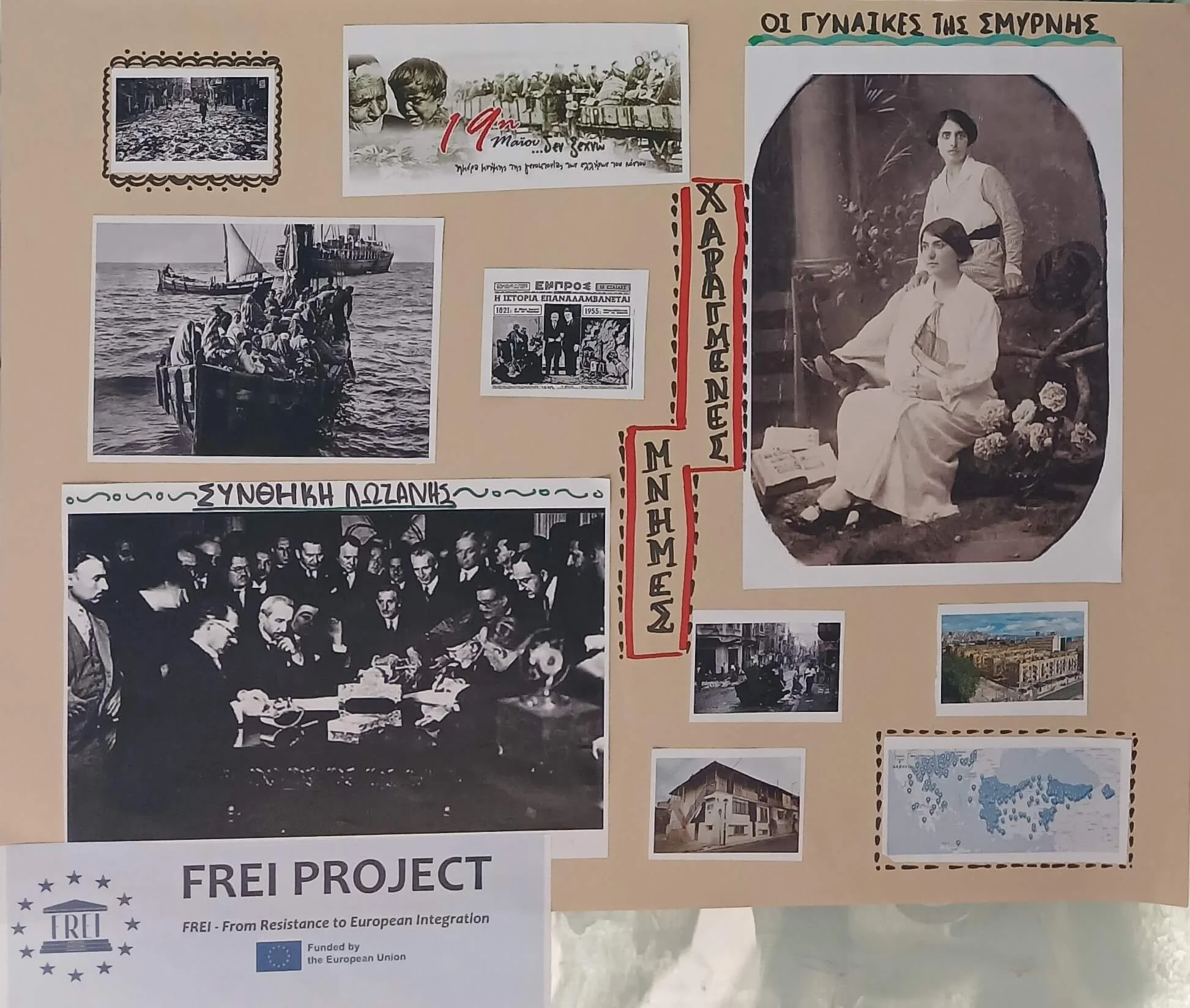
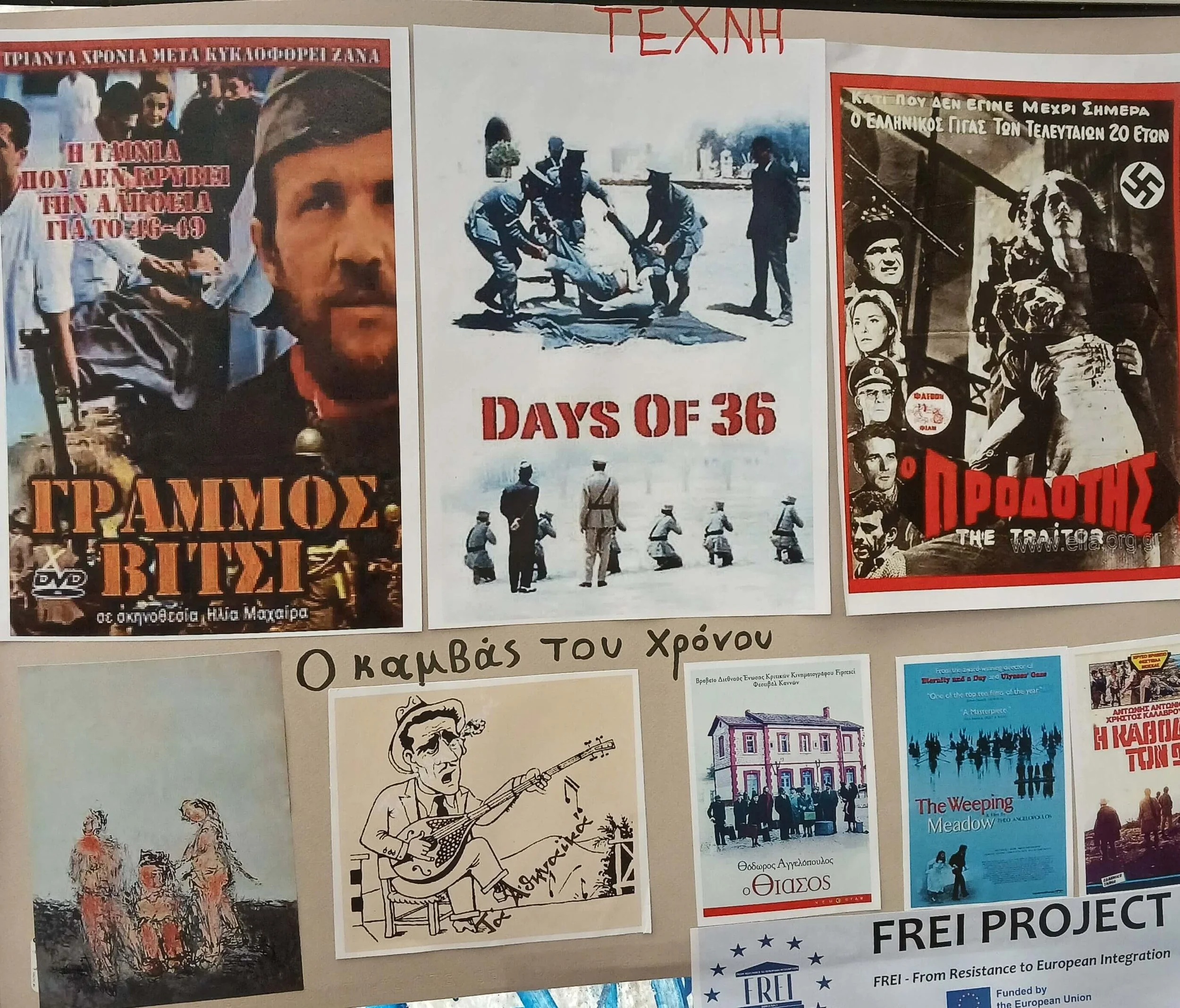

Learning by doing
The students came well prepared and asked probing questions about the violation of rights, the deprivation and the hardship the Greek people endured. Yet what engaged them most was taking part themselves. They sang, danced, acted, cut and pasted images, and became the protagonists of the day rather than listeners. Combining history education with the arts fostered historical awareness, critical thinking and a deeper understanding of democracy, human rights and European convergence.
Explore the materials
The materials the students worked with, including archival photographs from the periods of the Occupation, the Civil War and the dictatorship, are available on the Greek local path page of this guidebook »